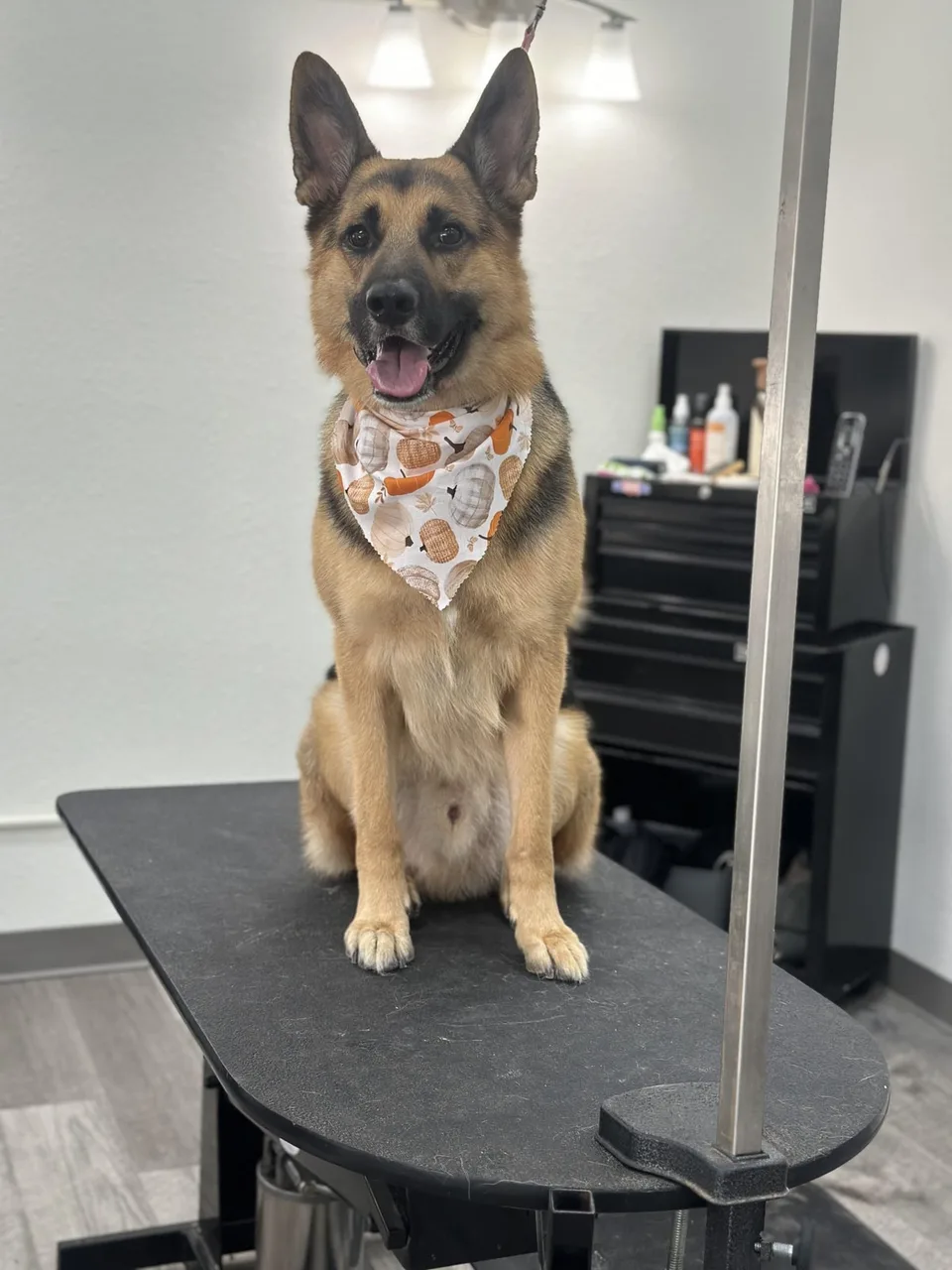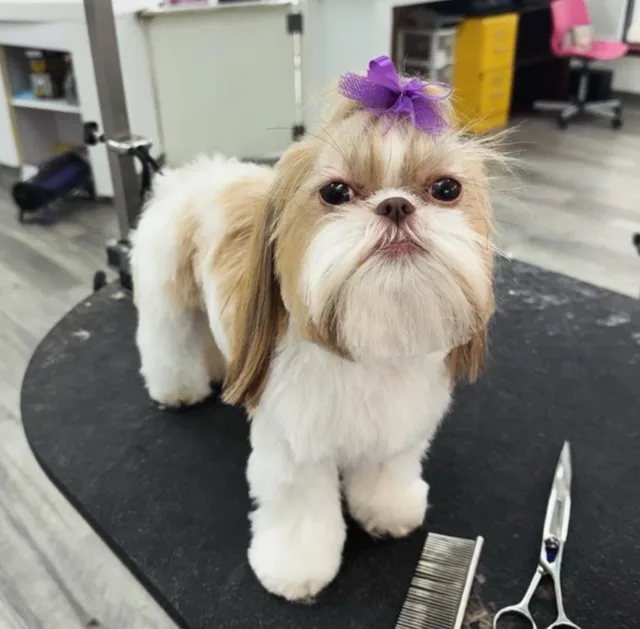
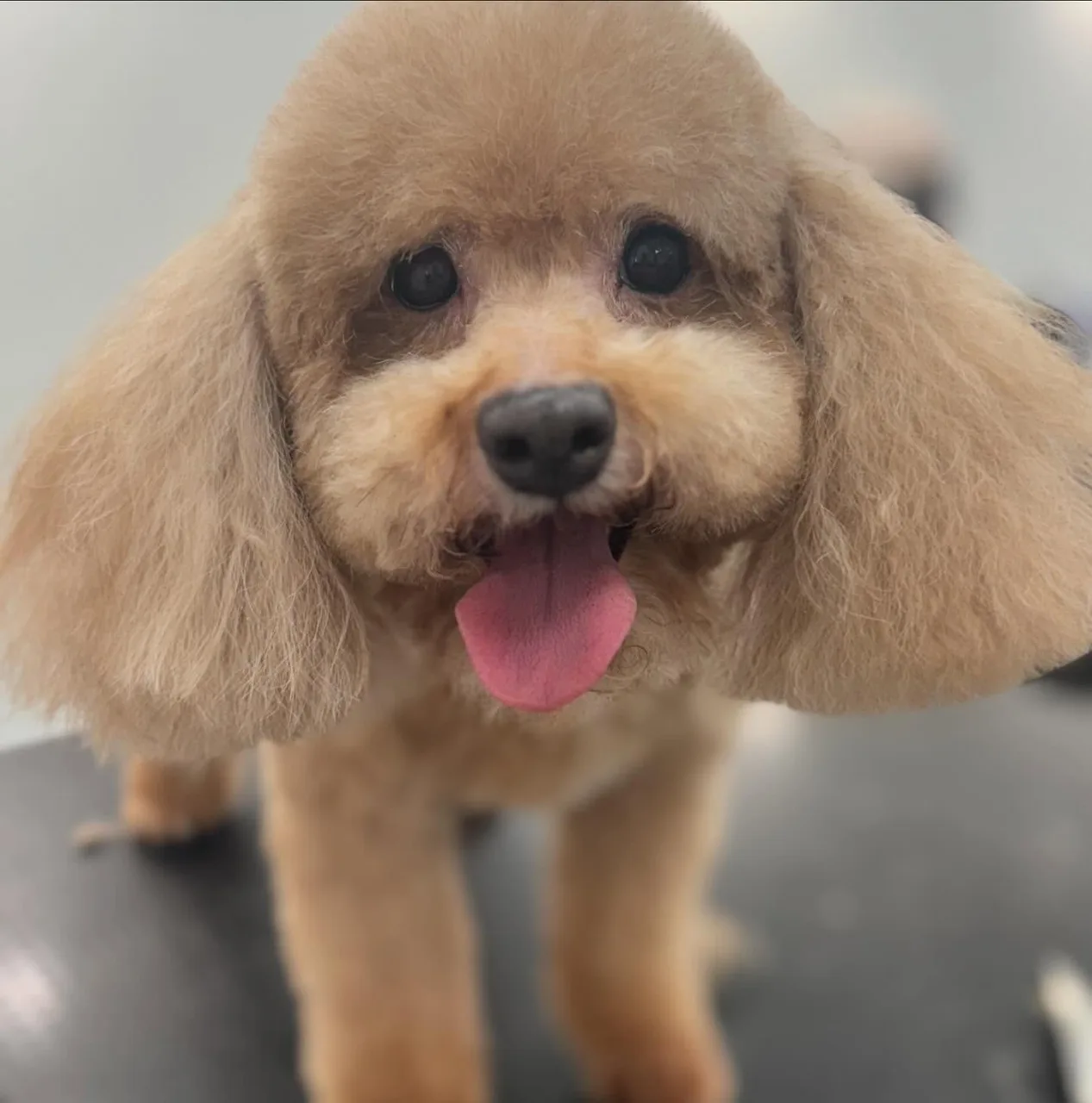
Most odd behavior after a groom is normal and fades within a day or two. A lot of handling and noise can leave a dog tired, clingy or hiding. Head shaking, scooting, licking, and acting unsure after a short haircut are common too. Call your vet if you see bleeding, limping, swelling, painful bumps or pus, or if your dog is still off after two or three days.
A grooming visit is a big day for a dog. New hands, new smells, running water, clippers buzzing near the face, and a dryer that sounds like a jet. Even a dog who handles it well can come home a little wound up or wiped out.
Why do dogs act strange after grooming?
There are three usual reasons:
- They're tired from a big day. Being handled for a few hours takes a lot out of a dog. Many sleep hard that evening.
- They're letting off stress. That full-body shake when a dog hops off the table, or comes home, is often a stress release. Vets see the same "shake off" after exam room visits.
- Their body feels different. After a big haircut, a dog feels air and touch on skin that was covered for weeks. Some act unsure or hide for a bit. If mats were removed, the skin underneath can be pink and tender, because mats pull on the skin every time a dog moves.
What's normal after a groom, and what causes it?
Here are the most common things owners notice, and what's usually behind them:
- Shaking the head or pawing at the ears. Ears get cleaned at most grooms, and hair inside the ear may be plucked. Dogs often shake their heads for a while afterward. If it keeps going past a day, or you notice a smell or discharge, have your vet check the ears.
- Scooting or licking the rear. This usually follows a sanitary trim or anal gland expression. It should settle within a day or so. If it doesn't, or you see swelling, call your vet.
- Licking or scratching the belly, armpits or groin. Close clipping in these spots can leave a mild rash, like razor burn. Keep your dog from licking it raw. Call the groomer so they know, and call your vet if you see bumps, open sores or swelling.
- Licking a paw or walking oddly. Nails trimmed short can feel strange at first, and a nail cut close to the quick can be sore. Our dog nail trimming guide explains the quick. A nail that keeps bleeding, or a limp that lasts more than a day, needs a vet.
- Hiding, clinginess or sleeping a lot. This is normal after a long, busy day. It should pass by the next day or two.
- Shivering. A dog with a fresh short cut can feel the cold, especially on a damp fall or winter day. A dog sweater helps until the coat grows in.
Cats can act out of sorts after grooming too. Many just want to hide somewhere quiet for a while. Let them.
When should I call the vet after grooming?
Call your vet if you notice any of these:
- Bleeding that won't stop, cuts, or swelling
- Limping that lasts more than a day
- Constant ear scratching, head tilting, or a bad smell from the ears
- Not eating for more than a day, or vomiting
- Behavior that is still clearly off after two or three days
- Painful red bumps, crusts or oozing along the back, especially with fever or low energy, a day to a week after a bath
That last one is easy to miss, and it matters. Vets call it post-grooming furunculosis. It's a deep skin infection, often caused by bacteria found in water, that can show up about two days after a bath. It needs a vet's care.
Please tell your groomer too. They'd want to know, and they can change how they handle your dog next time.
How can I help my dog settle down at home?
- Give your dog a quiet spot and keep the evening low-key.
- Stick to the normal routine for meals and walks.
- Offer a chew or a lick mat. Licking and chewing can help a dog relax.
- Don't force cuddles. Let your dog come to you.
- Once your dog is calm, look over the skin, ears and paws.
- Skip another bath for now. Let the coat and skin settle.

How can the next groom be less stressful?
Dogs get calmer about grooming when it's familiar. A few habits help:
- Keep a regular schedule. Ask your groomer how often your dog's coat needs a visit. Long gaps mean more mats, more work on the table, and more chance of tender skin.
- Brush between visits. A coat with fewer tangles means less pulling and shorter grooms.
- Share what you saw. Tell the groomer what your dog did after the last visit. If the ears bothered them, or the belly looked red, they can adjust.
- Practice at home. Short, happy handling sessions make a big difference. Our step-by-step guide shows how to prepare an anxious dog for grooming.

Have a question about how your dog is acting after a visit? Call Groomingdale's at (253) 301-2823, or send us a message.